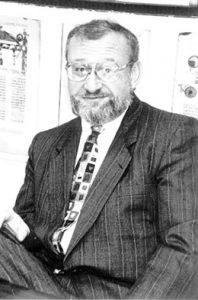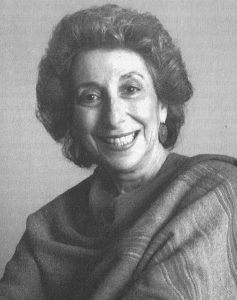

Judith Z. Abrams z”l
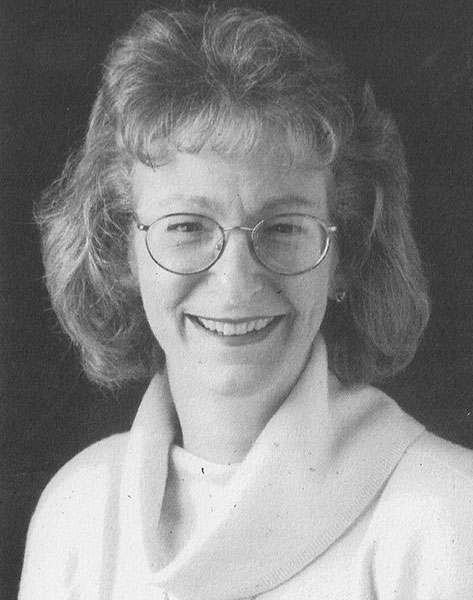
Judith Z. Abrams grew up in suburban Pittsburgh, Pennsylvania, the fourth of four girls born to two psychoanalysts. The family belonged to a small, local synagogue where Judith attended supplementary religious school and was “miserably misbehaved.” (She considers it a true example of “Jewish karma,” the principle of midah k’neged midah, “measure for measure” that she subsequently spent ten years teaching “miserably misbehaved” religious school students.) While studying at Oberlin College she totally forgot about Judaism and never attended Hillel functions. In her senior year, she studied for a semester at Leningrad State University. Despite the oppressive atmosphere, she found her way to a synagogue to attend holiday services. She sat in the balcony at the beautiful, huge Leningrad synagogue near the Kirov Theater. She could not understand a word. She had never been to a traditional worship service and did not understand the chanting, the Hebrew, or the silent Amidah. She has never forgotten that Simchat Torah when there were at least 10,000 Jews at the synagogue, spilling into the streets, dancing in throngs among informers and secret police. She thought of all the opportunities she had had to learn about her Judaism, opportunities that she had not taken advantage of. She thought of what was so precious and dearly bought for the Russian Jews in Leningrad that she had so cavalierly tossed aside. She returned to America and entered rabbinical school. Six months after returning from the Soviet Union she again crossed the ocean, this time to Israel. In 1985 she was ordained at the Hebrew Union College and moved to Houston, Texas, to become an assistant rabbi at a large congregation. Although she liked the meaningful life of a congregational rabbi, she felt strongly that she “had to keep learning or die intellectually and spiritually.” So she sought out Rabbi Joseph Radinsky of the United Orthodox Synagogues in Houston who opened the world of the Talmud to her. He did not care that she was a woman and a Reform rabbi. Under his tutelage she began to understand the Talmud’s rhythm and beauty. She fell in love with it. It gained a lock on her heart which has never been broken and which she nurtures every day. As a result of this, Talmud teaching called her strongly and she founded Maqom, an on-line Talmud academy, as the institutional base from which she might achieve her goal of limitless Talmud study. She wanted to share the joy and the journey of Talmud study with as many people as possible. And she wanted to let learners know that no one is so far away that they cannot come back to Judaism through the beauty of the Talmud. She felt there could be few who were farther away than she had been.