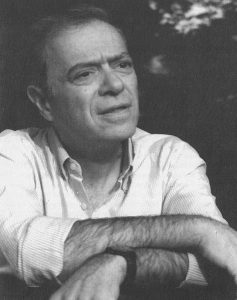

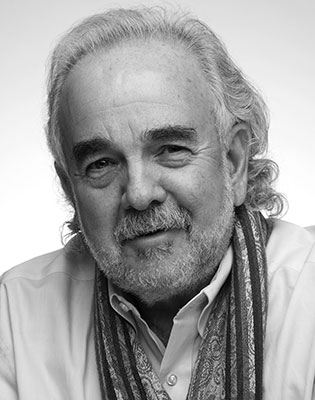
Peter Geffen
Peter A. Geffen
Founder and Executive Director
KIVUNIM
New York, NY
“I have consistently designed settings and executed approaches to the study and experience of Judaism that are rooted in a series of universal values. Through KIVUNIM, both gap year students and teachers in North American Jewish schools experience the comprehensive integration of majority host cultures and local Jewish life in ways that provide richness and diversity to Judaism and exemplify the fulfillment of Jewish life in the encounter of Judaism and the Jewish people with the ‘Other’.”
Peter A. Geffen is the Founder and Executive Director of KIVUNIM, The Institute for Experiential Learning for Israel and World Jewish Communities Studies. One of Peter’s primary innovations through KIVUNIM was the establishment of a unique gap year program in Israel, KIVUNIM: New Directions. This post-high school/pre-college program combines an academic-year-long residence in Israel with five international study missions to 10 countries from Morocco to India. In fact, some universities award participants a full year of college credit for the KIVUNIM program, “Building World Consciousness through the Jewish Lens.” Peter is responsible for original program concept and design, educational program supervision, designing itineraries and developing local relationships, overall supervision of senior staff and program direction, recruitment, fundraising, and board development.
Over the past 10 years, KIVUNIM Summer Institutes in Israel and international diaspora Jewish communities have served more than 1,300 teachers from more than 125 Jewish schools across North America. Peter is also the Founder of the Abraham Joshua Heschel School, community Jewish day school in New York City that derives its pluralistic non-denominational educational philosophy from Rabbi Abraham Joshua Heschel. In addition, he was the Founder and Principal of the Park Avenue Synagogue (now Rabbi Judah Nadich) High School in NYC.
“I grew up in a Conservative rabbi’s home bearing a maternal and paternal Jewish legacy that was both learned and philanthropic. But it was my experience in Camp Ramah that shaped my Jewish life, educational philosophy, and career. Ramah prepared me to take in conflicting and diverse points of view. It allowed me to understand that a world of ideas awaited me outside the narrow and particularistic universe of my insular Jewish life. It was there that I first felt the power of youth to act
consequentially, exerting influence and power.”
“Israel was to prove to be a bridge of disparate worlds. While on kibbutz in northern Israel in 1964 a scratchy and hard-to-understand short-wave radio broadcast announced the following message: ‘The bodies of three civil rights workers, Andrew Goodman, James Chaney and Mickey Schwerner were found today in a red clay dam in Philadelphia, Mississippi.’ The shock set in slowly, but the awareness that my classmate at Queens College, Andy Goodman, was dead was immediately intense. I vowed to myself that I would take his place the following summer. Dr. Martin Luther King, Jr. had asked Rabbi Abraham Joshua Heschel to join him at the front of the line of march from Selma to Montgomery earlier that spring. King’s preaching and Heschel’s ‘walking witness’ confirmed the inextricable link I was feeling between Judaism and social justice.”
Peter has been charting new directions for Jewish education ever since by inspiring engaging commitment to the social justice issues of our times.
Peter earned his B.A. in History (with a concentration in Jewish History) from Queens College of the City University of New York and his M.A. in Religious Education from New York University. He also received a Certificate in Psychotherapy and Counseling from the Alfred Adler Institute in New York City. Peter lives in New York City with his wife, Susie Kessler, and is the proud parent of two sons and a daughter. He recently welcomed his first granddaughter.