
Sidney Schwarz
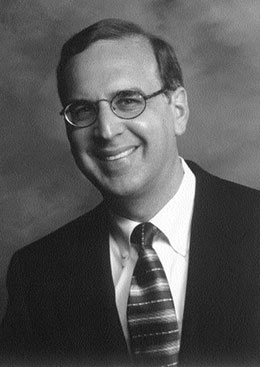
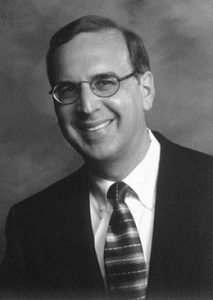
Rabbi Sidney Schwarz was raised in an observant household on suburban Long Island by his parents, Judy and Allan Schwarz, who were models of Jewish communal involvement and commitment. While benefitting from an early exposure to yeshiva education and Torah learning, his most formative experiences were in United Synagogue Youth (USY) and at Jewish summer camps as a staff member at Kfar Masada and Cejwin Camps. His experiences on the 1971 USY Eastern European Pilgrimage to Romania and Russia led Sid to pursue his passion for the Jewish people through political engagement.
Sid attended the University of Maryland, drawn by the proximity to Washington, DC. He was the youngest person ever appointed a Democratic Committeeman on Long Island and was eager to pursue a career in politics. Politically active as an undergraduate, his championing the cause of Jewish studies left the most enduring mark on his life. Although he majored in history and political science, Sid organized the campus to lobby for new courses in Jewish studies. He served on the committee to hire the first full-time faculty member in Jewish studies; an official Jewish studies major followed shortly thereafter.
Sid worked his way through college as a youth director and teacher at several local congregations. Feeling that this work was more his calling than politics or law school, he enrolled in the Reconstructionist Rabbinical College (RRC). Sid held a student pulpit at Beth Israel of Media, PA, where his interest in re-inventing synagogue life was fully supported by the synagogue membership. A year after his graduation Sid joined the RRC faculty to teach a course on “Alternative Communities.” That course would eventually mature into his important book, Finding a Spiritual Home: How a New Generation of Jews Can Transform the American Synagogue.
After earning a PhD in Jewish history at Temple University, he moved to Washington with his wife, Sandy Perlstein, to assume the post of Executive Director of the Jewish Community Council. Here he was able to pursue his longstanding interest in Zionism, intergroup relations, and social justice. He served as an organizer of the historic Summit Rally for Soviet Jewry in December 1987.
Sid was nonetheless impatient with conventional approaches to Jewish life. Taking a considerable risk, in 1988 he left the Jewish Community Council and founded two institutions. With several local families, he established Adat Shalom Reconstructionist Congregation in Bethesda, MD, which he led for eight years, and where he was able again to experiment with his own model of synagogue community.
At the same time, he daringly created an organization, initially without a board or any financial backing except his own, designed to integrate Jewish learning, values, and social responsibility—now known as PANIM: The Institute for Jewish Leadership and Values. Sid created all of PANIM’s major programs, including Panim el Panim: High School in Washington, which trains Jewish teens to be political activists using the inspiration of Jewish teachings; the Jewish Civics Initiative, the largest Judaically framed community service program in the country; and the E Pluribus Unum Project, an interfaith exploration of religion, social justice, and the common good. PANIM now boasts a staff of fifteen and works in over 100 communities throughout the United States. An avid athlete, Sid’s greatest joy is still playing basketball with his children, Daniel, Joel, and Jennifer.